Some of these five student families have joined Hua Zhang Book Club livestreams; others have been with YouthMBA Academy for years. The paths they worked out are exactly the detours The One School wants to save other families.
The timer was set for 25 minutes. A few minutes in, he wanted to get up.
Family
Mom trained in traditional Chinese medicine and now cares for two children full time; Dad works in another city.
Schooling
Since September, her younger son attends school in the morning and learns at home in the afternoon. She negotiated it with his homeroom teacher, then the principal.
The snag
Afternoons at home are looser than school; Mom gets anxious and strict.
Mrs. Li is a student in the AI Future School prep program. Her son does well at school, but she believed the school's approach was no longer enough and wanted him to build independent learning skills, so she went to talk to the school. She told the principal: he'll keep up with schoolwork, and if he doesn't, we'll come back. The school agreed.
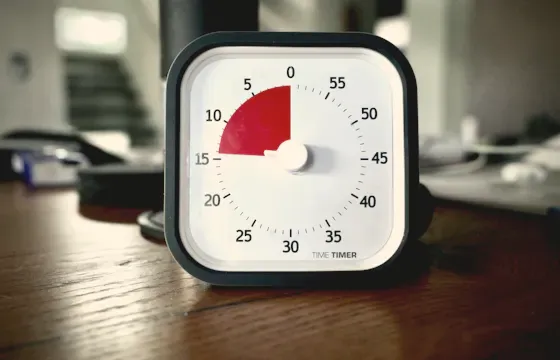
Two months later, the problems showed. At home in the afternoon, he couldn't sit still: he wanted snacks, he wanted to go play soccer. The timer was set for 25 minutes, and he often got up before it rang. She got irritated, then harsh.
Hua ZhangWhen you went from medicine to full-time mom, did you ever give yourself a break?
Mrs. LiNo. His dad works away, so it's always been just me at home.
Hua ZhangGetting the principal to agree to half days took real courage, and the direction is right. But if home becomes the same routine in a new place, that's risky for you.
1
Give it time
This semester, afternoons lead with interests, and core subjects come through play: math with LEGO, practice on Khan Academy, English through games. Make the afternoon look like a timetable and he'll soon be asking to go back to school to see his friends.
2
No timetable, just one or two must-dos
A Pomodoro timer works for adults. For an eight-year-old it often backfires: 25 minutes of something he loves flies by, while 25 minutes of something he doesn't feels like forever. Once the one or two key afternoon tasks are done, it's game time.
3
When you see progress, say it
He's on a new path with no one to compare himself to. Don't let the anxiety creep back in a few days later.
Why this story comes first
This call was almost a One School assessment in miniature: see the snag clearly (not a lazy child, but a poorly structured afternoon), pick the one thing to change first, and offer adjustments she could make right away. Mrs. Li's direction was right. What was missing was method, and someone to look in with her every week.
02/Chengdu · Xuan's dad/Daughter in half-day school since Grade 3/YouthMBA Academy interview
An engineer dad's half-day experiment.
Afternoons split into short blocks, plus one thing to commit to for the long run: chess.
The starting point
By Grade 2 she was top of her year. From Grade 3, her dad wrote leave notes and arranged with the school for her to attend only half days, with no more than an hour of homework a day.
Her talent
She chose chess herself at seven, studied it for nearly six years and earned China's National Class 1 athlete rating.
Xuan's dad asked old classmates who had become teachers: forty years after we were in primary school, has school fundamentally changed? They all shook their heads. He went home and proposed an experiment to his wife: from primary through high school, their daughter would attend only half days, explore broad interests and develop one standout talent.
01Learn to live first. School ended at 12:30. Rather than leaving her with grandparents, she cooked her own noodles and dumplings in a rice cooker.
02Afternoons in blocks. First 15–20 minutes each, then 30 minutes from Grade 3, with 15-minute breaks. At first her dad planned with her; later she planned on her own.
03No direct answers. When she got stuck, her dad only guided her to ask questions and find her own way. He jokingly called himself "dad and teacher of every subject."
04One thing to go deep on. Every day, a block or two reviewing games and solving tactics puzzles.
I hope she grows into an ordinary person with a moral compass, inner strength and real ability.
Xuan's dad
What we took from it
Half-day school isn't letting a child run free. What Xuan's dad did was redesign her time and give her one thing to put down roots in. But not every family has an engineer dad who can teach every subject. That's exactly the gap The One School aims to fill.
03/Wuhan · Zhuozi/Son, 13, public middle school/"Turning Points" parent interview
Two days to prepare for a ball-kid tryout.
A talk on Thursday, the tryout on Saturday.
Grades
Middle of the pack: around 20th in a class of 50.
Mom's view
Parenting is a marathon, not a sprint.
Who leads
Mom led until Grade 3, then handed off to Dad, who had more in common with him.
At a lunchtime talk, the school announced a search for ball kids for the Wuhan Open. He badly wanted to go, but the talk was on Thursday and the tryout on Saturday, with a rules test and an English conversation.
01Don't decide for him. The family ran a SWOT analysis at the dinner table: strengths, weaknesses, opportunities, threats. Mom said she'd handle any scheduling conflicts, but whether to apply was his call. He came out of the shower and said: I'm in.
02Find his own method. He watched videos online to learn what rolling and feeding balls means, used AI to build a table of English tennis terms, printed it and memorized it line by line.
03Explain it to own it. Dad asked questions and AI generated quizzes. Early Saturday they watched a tennis final together, with him commentating and explaining the rules.
04Review it himself. After the tryout, he said it first: the rules went well, one name slipped his mind, and he'd never learned the English word "ball kid."
Later his dad did one more thing: to stop explaining English reading line by line every day, he trained an AI agent to tutor him. "It's more patient than I am."
What we took from it
Find one thing a child genuinely wants to do, help them see it through with the right method, then carry that method back to schoolwork. That's what we mean by "one or two breakthroughs a year."
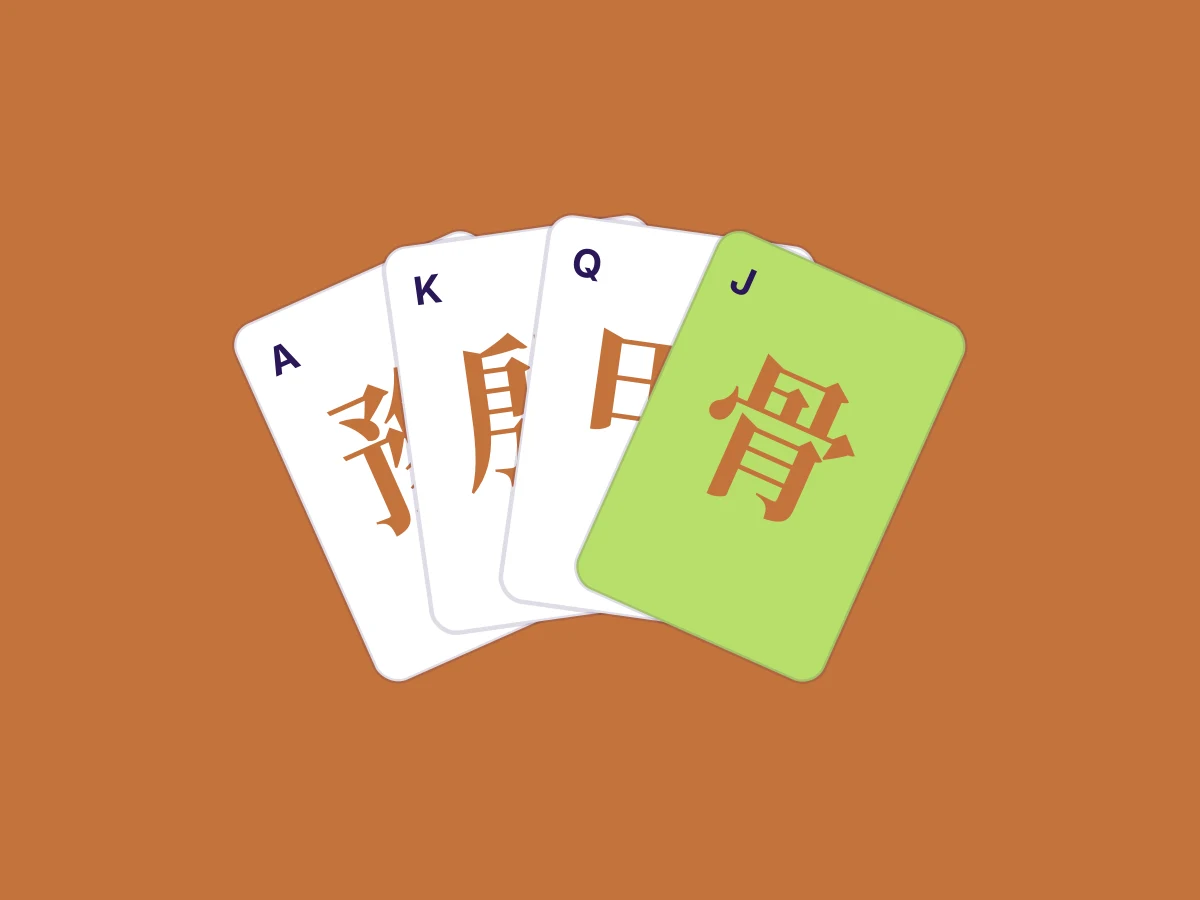
The "Henan study-trip playing cards" the children designed themselves sold several hundred decks.
Thank you for respecting my ideas instead of insisting that I always follow yours; thank you for letting me explore many interests instead of only studying and doing exercises…
From her daughter's letter · New Year's Day 2026
Every New Year's Day for seven years, Amy has written her children a letter. This year, her ten-year-old daughter wrote one back for the first time: two pages, nearly a thousand characters.
Looking back, most of what Amy got right happened in the free time. She deliberately chose a school with a lighter workload and more breathing room, then put that time to use:
01A do-it-yourself birthday party. No competing over a tenth birthday. The children won "seed money" in a quiz, then shopped, ordered pizza, cooked and decorated themselves. The adults only handled safety.
02A neighborhood reading club. Every Saturday afternoon, a few children read biographies and put on plays. The community offered free space, and one mom drove two hours each way every week to bring her child.
03A project that actually sold. After a heritage trip to Henan, the children worked in teams to create study-trip playing cards, from choosing topics and drawing by hand to oracle-bone script, all on their own.
04AI as a second brain. Her daughter launched an English stage production of Heidi at school; mother and daughter used AI to draft the script structure, then revised it together.
Families should hold the reins of their children's education.
Amy
What we took from it
Free time isn't empty time. Filled with reading, travel, projects and friends, it went hand in hand with grades that grew steadier from Grade 3 or 4 onward. The One School's semester plans help families make good use of exactly this kind of time.
05/Guixin/Daughter in Grade 8/"Turning Points" parent interview
From purposeful play to a clear direction.
Explain it to someone else, and an unfamiliar subject can become a strength.
Mom
Works in finance. Over the years of raising her daughter, she qualified as a career planner herself.
Daughter
Tried dance, Peking opera, pottery, piano and Chinese painting; teachers noticed her unusually sharp ear.
Her daughter helped her structure this talk. She said: Mom, don't tell people what everyone already knows. Tell them what career planning looks like to you, "like when you let me play with purpose as a kid."
01Interests are found by trying. At a dance competition, her teacher asked her to write reflections on training. That's how she started writing fiction.
02Actually do something. For the school drama festival, she volunteered to write and direct. Mom became her unofficial assistant, backing her with time, money and help.
03Assessments only confirm. After a career assessment, she said: "Mom, it's spot on. This is exactly what I want to do."
04Explain it, and an unfamiliar subject becomes a strength. From an early age she explained problems to her mom, Feynman-style. By middle school, she had talked her way into making biology one of her strengths.
For parents of teenagers, remember this: talk less, cook more.
Guixin
What we took from it
Direction isn't something a test reveals. It's calibrated through one attempt after another. That's what The One School's end-of-semester review does: look back and see where the child was most alive.
True stories from my interviews with our student families, shared with their permission.
Five families, four lessons
Each took a different path, yet what they got right looks alike.
Each one maps to a specific part of The One School.
Mrs. Li · Xuan's dad
Fix the structure before asking for effort
A child who can't sit still usually isn't lazy; the time is arranged the wrong way.
→ Semester plan: just one or two things a day
Zhuozi
One thing they really want beats ten classes
Children give their all to goals they set themselves, and methods they learn carry back to school subjects.
→ One or two breakthroughs a year
Amy
Use free time well
Fill the space with reading, travel, projects and friends.
→ Rethinking extracurricular spending
Guixin · Zhuozi · Amy
Parents move from enforcer to teammate
From back to back, to face to face, to side by side.
→ Monthly parent meetings
Your family's path is worth a conversation too.
Every child's challenges are different, and so are the solutions. Start with an assessment.